Resources
We Speak Two Languages at Home. Is That Confusing My Child?
Understanding bilingualism, speech development, and what parents need to know.

Ms.Hafswa Aslam
28 Oct 2026
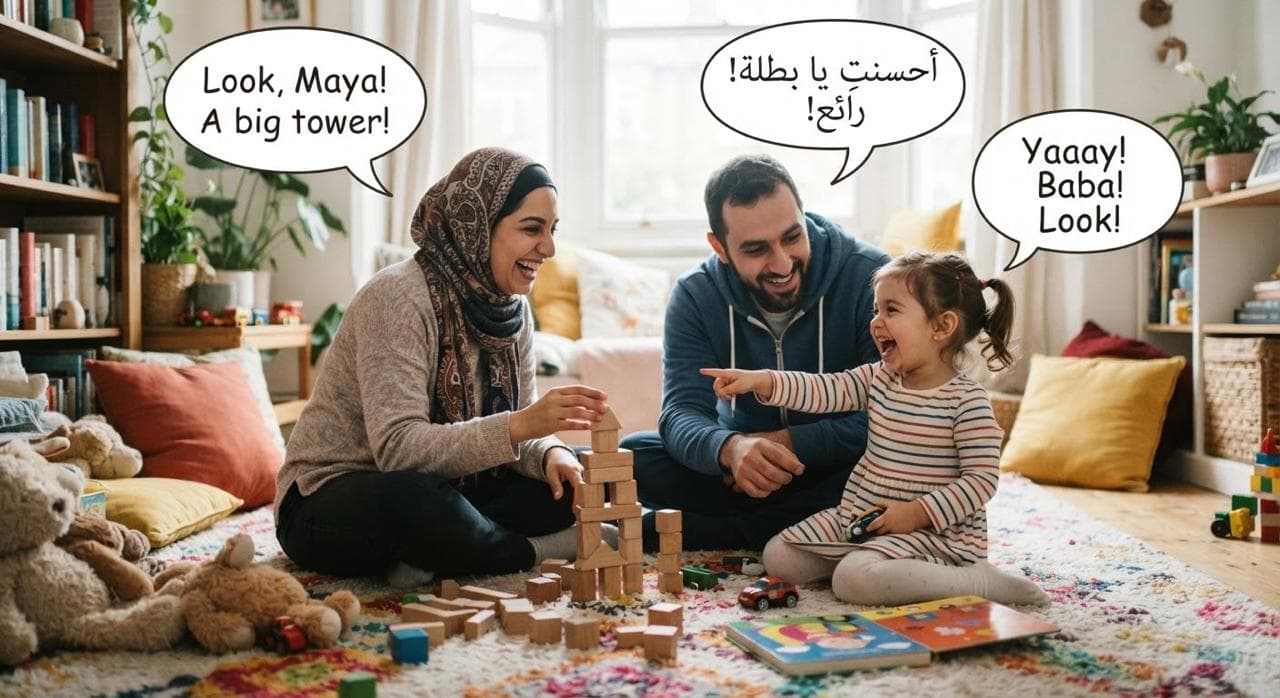
"Should we stop speaking Arabic at home and use only English?"
"My child understands Malayalam but only answers in English. Is that normal?"
"We speak Arabic, English, and our mother tongue at home. Is that why my child isn't talking yet?"
We hear these questions often from families across India and the GCC. When a child's speech is delayed, parents naturally wonder whether hearing several languages is the cause. Some are even told to drop their mother tongue.
The short answer: no. Growing up with more than one language does not cause speech or language delays.
Can Children Learn More Than One Language at Once?
Yes. Children can learn two or more languages from a very young age. A child in Dubai might hear Malayalam at home, English at school, and Arabic in the community. A child in India might hear Hindi, English, and a regional language every day.
Children gradually learn which language goes with which person, place, or situation. Most hit early milestones, like first words around age one and two-word phrases around age two, on a similar timeline to children learning one language (ASHA).
A few things are normal in multilingual children and are often mistaken for a delay:
- Fewer words in each language.A bilingual child may know fewer English words than a monolingual classmate. Count the words across all their languages, and the total is usually similar.
- One stronger language.Children tend to be strongest in the language they hear most. This can shift over time, for example when they start school.
- A quiet period at a new school.A child starting an English-medium school with little English may speak very little there for a while. They are listening and learning, and this phase usually passes.
Why Does My Child Mix Languages?
You might hear your child say:
- "Amma, I want vellam!"
- "Mujhe that toy chahiye!"
- "Baba, can I have khubz?"
This is called code-switching, and it is a normal part of being multilingual. Adults do it too. Children may switch because a word comes to mind faster in one language, because they learned it in that language, or because they are adjusting to who they are talking to.
Mixing languages does not mean your child is confused.
What If My Child Has Autism or a Speech Delay?
This is where many parents worry most. If a child has autism, a developmental language disorder, or another communication difficulty, it can seem logical that one language would be easier.
The research does not support this. A 2023 systematic review of 22 studies found no evidence that exposure to more than one language harms the language or communication skills of autistic children(Gilhuber et al., 2023).Multilingual autistic children generally developed much like their monolingual autistic peers. The same review noted that parents are still often advised to drop a language, despite no evidence that this helps.
There is a real cost to that advice. For many families, the mother tongue is the language of affection, comfort, and connection. Picture a grandmother who speaks only Arabic, unable to talk naturally with her grandchild because the family switched to English.
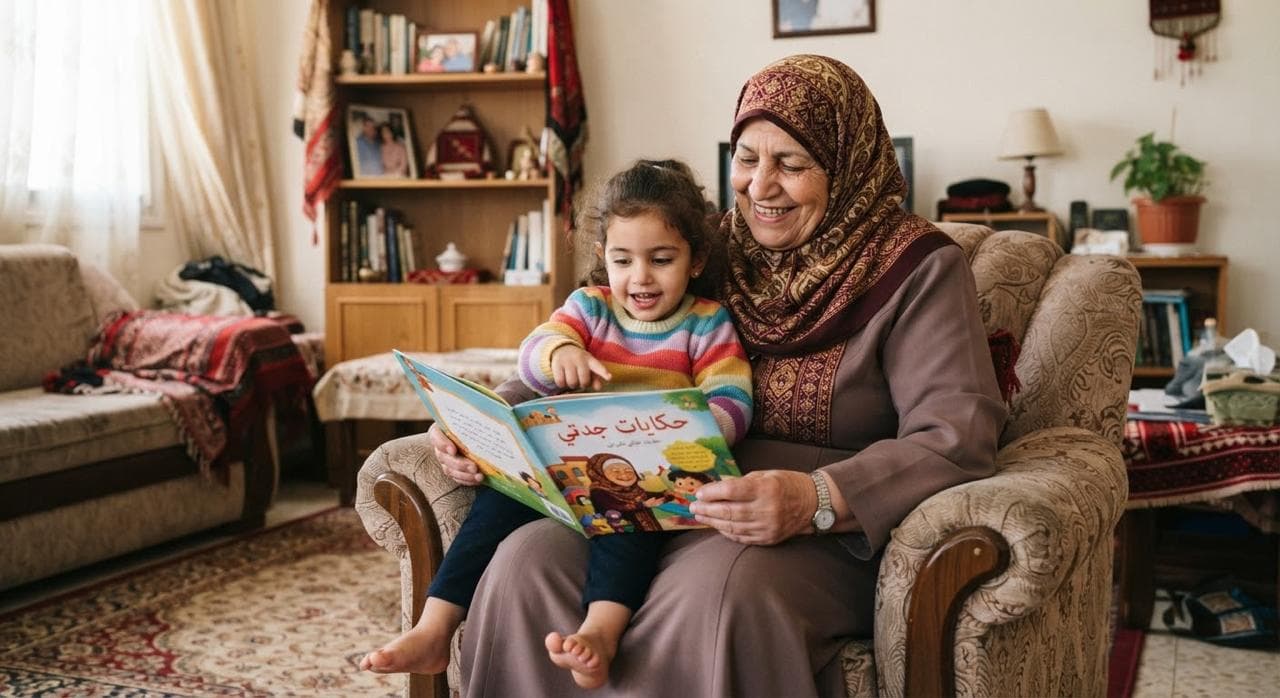
Communication is not only about learning words. It is how children build relationships, express their needs, and take part in family life.
My Child Understands Our Mother Tongue but Answers in English. Is That Okay?
Yes, this is very common. Understanding a language and speaking it are two different skills. A child may prefer English because they use it at school, in play, and on screens.
Rather than insisting they reply in a particular language, keep the conversation going in yours. If your child says "I want water," you might answer: "Vellam venam? Here you go!" They get their need met and hear the mother tongue at the same time.
If you want your child to speak the mother tongue, not just understand it, they will need lots of rich exposure to it: time with grandparents, stories, songs, and play in that language. Without this, the school language often takes over.
Five Ways to Support Language at Home

- Speak the language you're most comfortable in.You don't need to switch to English because it's the school or therapy language. Rich, natural talk in any language builds your child's skills.
- Use everyday routines.Mealtimes, bath time, dressing, and play are full of chances to talk. While making a snack, name the foods, offer choices, and encourage your child to ask for what they want.
- Follow your child's interests.If they love cars, animals, or bubbles, start there. Comment on what they're doing and build on their words or gestures.
- Model, don't correct.If your child mixes languages or uses half a sentence, respond with the full version naturally instead of correcting them. Keep talking fun.
- Wait for a response.Some children need extra time to process and reply. Ask, then pause, before repeating the question or giving the answer.
When Should Parents Seek Support?
Multilingualism doesn't cause delays, but multilingual children can still have speech, language, or communication difficulties. The key question is whether the difficulty shows up in all of their languages or only one. A gap in one language usually reflects less exposure. Difficulty across all of them is worth checking.
Talk to a qualified speech-language therapist if your child:
- Is not meeting expected communication milestones in any of their languages
- Has trouble understanding or expressing themselves across their languages
- Rarely tries to communicate needs through words, gestures, or other means
- Loses words or skills they previously had (seek help promptly)
- Has communication difficulties that affect everyday life
A hearing check is a good first step for any child with a speech concern. A good assessment looks at your child's language history and, wherever possible, tests skills in each language they use.
When a child has broader developmental or functional communication needs, speech therapists, occupational therapists, and behavior analysts often work together.
The Takeaway: You Don't Have to Choose Between Language and Connection
For multilingual families, language carries culture, identity, and belonging. Your child doesn't have to give up their mother tongue to learn English.
What matters most is giving them meaningful chances to communicate, responding to their attempts, and getting individual guidance when you have concerns. The goal isn't for children to speak one particular language. It's for them to connect, express themselves, and be understood.
Looking for support with your child’s development? Floreo is here to support your child’s growth and learning. Contact us to learn more about our courses and services.
Sources
- American Speech-Language-Hearing Association.Learning More Than One Language.
- Gilhuber, C. S., Raulston, T. J., & Galley, K. (2023).Language and communication skills in multilingual children on the autism spectrum: A systematic review.Autism, 27(6), 1516–1531.